
Wellness Consultations
Prepare for your combined VECTRA® 3D (Diamond Creek) + digital full skin mapping (Ivanhoe) skin check
This pathway combines 3D whole-body mapping (Diamond Creek) with digital full skin mapping (Ivanhoe) to give the most precise baseline and the most practical long-term monitoring.
[Book a combined VECTRA 3D (Diamond Creek) + Ivanhoe skin check (AutoMed Combined Mapping Booking)]
Key takeaways
- You’ll complete your VECTRA 3D scan in Diamond Creek first, then your doctor skin check + digital full skin mapping in Ivanhoe.
- The Diamond Creek scan can be on the same day as Ivanhoe, or a different day.
- If same day, appointments must be at least 4 hours apart.
- Our staff securely transfer your images electronically from Diamond Creek to Ivanhoe, so your doctor can review everything in one clinical record.
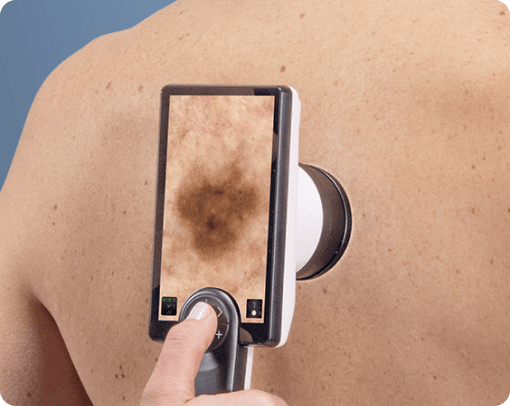
- At Ivanhoe we also capture digital full skin mapping images. Together, this gives “best of both worlds”:
○ 3D mapping helps precisely locate and track lesions over time.
○ 2D digital maps support careful side-by-side comparison year to year.
- Most patients do yearly Ivanhoe mapping, with VECTRA 3D repeated about every 3 years (unless your doctor recommends a different schedule).
Jump links
Your appointment sequence
Step 1 — Diamond Creek: VECTRA® 3D scan
You’ll attend Diamond Creek for your VECTRA 3D scan first. This creates a detailed 3D baseline map of your skin.
Step 2 — Secure transfer of images to Ivanhoe
Our team will electronically and securely transfer your Diamond Creek images to Ivanhoe so they are available for your appointment.
Step 3 — Ivanhoe: digital full skin mapping + doctor skin check (40 minutes)
When you arrive in Ivanhoe, we’ll:
- Capture digital full skin mapping images, and
- Proceed with your doctor-led skin check.
Why combine both?
- The 3D map helps pinpoint exactly where each lesion sits on your body so subtle changes are easier to track.
- The 2D digital maps make year-to-year comparison fast and consistent, helping us look for tiny changes over time.
- Practically, this means you don’t need to travel to Diamond Creek every year: many patients do Ivanhoe mapping in the intervening years, and repeat VECTRA 3D about every 3 years (or as advised).
Same-day vs different-day bookings
Same day (Diamond Creek + Ivanhoe)
- You can do both on the same day, but appointments must be at least 4 hours apart.
- This spacing helps ensure the workflow is smooth and your images are ready and available at Ivanhoe.
Different days
- You can also do Diamond Creek first on one day, and Ivanhoe on another day.
- If you prefer this option, book Diamond Creek first, then schedule Ivanhoe after your scan.

Preparing for your images
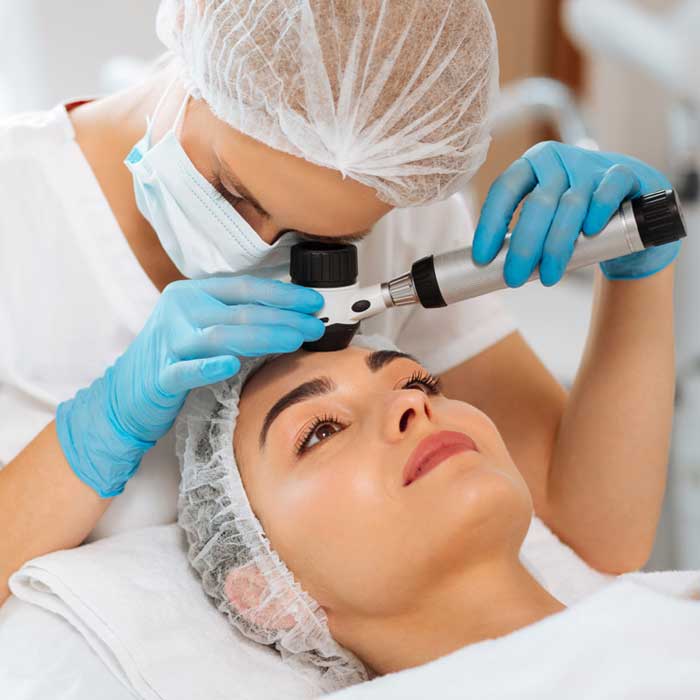
Please come with a clean face and skin
For the most accurate assessment and best-quality images, please remove:
- All makeup (including concealer, foundation, powder)
- Any tinted products, including tinted moisturiser and tinted sunscreen
- Fake tan (where possible, please allow it to fade/remove before your visit)
- Nail polish (if you can remove it — it can make it harder to assess nail colour and the skin around the nails)
Why this matters: makeup and tinted products can obscure subtle colour changes and surface features that help us detect and track lesions over time.
Clothing recommendations
Underwear (mapping is done in underwear)
During the mapping photos (3D in Diamond Creek and digital full skin mapping in Ivanhoe), you’ll remain in underwear.
For men (especially):
- Prefer briefs or smaller styles
- Try to avoid boxers because they cover more of the upper legs, reducing how much skin is captured in the images
For everyone:
- Choose underwear that is comfortable and allows good visibility of the upper thighs.
Bras (women) — what we prefer and what’s optional
For the mapping photos, we prefer the bra off because:
- Skin cancer can occur anywhere
- Bra straps and bands can hide parts of the back, shoulders, and upper chest
Your comfort matters: you can keep your bra on if you prefer.
If you do keep your bra on during mapping, we recommend:
- Wearing a bra that reveals as much skin as possible, especially on the back
- Prefer a single strap rather than multiple straps or criss-cross designs
- Trying to remember which bra you wore, and if possible wearing the same bra for future mapping so images match more closely over time
What happens on the day
Diamond Creek — VECTRA® 3D scan
- Mapping photos are taken in your underwear.
- We’ll guide you through the positions required for consistent images.
Ivanhoe — digital full skin mapping + doctor appointment
- We’ll capture your digital full skin mapping images.
- Then you’ll have your 40 minute doctor appointment.
- You’ll be given a thick cotton patient gown.
- You can choose whether you feel more comfortable with your bra on or off for the examination.
- If you keep it on, we can usually work around it (for example, asking permission to lift straps briefly to examine the skin underneath).
If you need to reschedule
You’ll receive a reminder 2 days before your appointment. Please confirm when you receive it.
If you need to reschedule, please call the clinic on 8373 4648 at least 24 hours before the appointment to avoid losing your deposit.
Accessibility and mobility needs
If you have any mobility issues, pain, or difficulty standing/turning for photos, please call ahead so we can make your visit as smooth as possible.
Frequently Asked Questions
Can I have yearly 3D scans if I wish?
Of course, it is completely up to your convenience as to how often you have the 3D scan performed.
Do I have to remove my bra?
No. We prefer bra off for mapping photos, but you can keep it on if you’d like.
Why does underwear style matter?
Because mapping photos capture what’s visible. Underwear that covers less skin helps us photograph more of the upper legs and hips.
What if I forget and arrive with makeup on?
We have gentle cleansing wipes to help you on the day. If possible, arrive ready — or bring what you need to remove makeup (in a private room where the photos occur) before your appointment.
What if I don’t want to remove my makeup at all?
It is completely your choice to keep makeup on and not remove it. Please understand that this means we cannot properly examine the skin covered by makeup, and therefore cannot detect skin cancers in those covered areas.